


The Night I Cried Over a Blob: How a $9.99 Book Brought Me Back From Creative Burnout
2:14 AM, Rain, and a Microwave Clock
It was 2:14 AM on a Tuesday. I know because I'd been staring at the microwave clock for what felt like an hour, waiting for water to boil for tea I didn't actually want.
Rain was doing that thing where it doesn't pour — it just persists. The kind of rain that makes you feel like the whole world is holding its breath, waiting for you to say something important. I was sitting at my kitchen table in an apartment that had too many half-finished projects in its corners. A watercolor set I'd bought in January, still in its plastic wrap. A sketchbook with exactly three pages used, all from 2019. A ukulele that had become a very expensive coat rack.
I was thirty-four years old, and I couldn't remember the last time I'd made something just because I wanted to.
Not for work. Not for Instagram. Not because I thought I should be "working on myself." Just… for the quiet joy of it.
I used to draw constantly. As a kid, I was the one who colored outside the lines on purpose, who filled margins with tiny creatures no one asked for. Somewhere between college and my first real job and the slow accumulation of responsibilities that don't announce themselves but just sort of take up all the oxygen in a room — I stopped.
I didn't notice it happening. That's the thing about losing yourself. It's not a dramatic exit. It's a slow fade.
The Gray: How I Lost Myself Slowly
By thirty-four, I had what looked like a good life on paper. A job that paid the bills. An apartment with decent light. A calendar full of commitments I'd agreed to because saying no felt like a character flaw.
But inside, everything felt like it was running on fumes.
I'd started calling it "the gray." Not depression exactly — I was still functional, still showing up, still laughing at the right moments. But everything had lost its saturation. Food tasted like food. Weekends felt like recovery periods rather than living. And the idea of creating something — anything — felt like being asked to run a marathon after years on the couch. Exhausting just to think about.
I tried the things people suggest. I downloaded meditation apps. I bought a gratitude journal (used exactly twice). I went for walks. I drank the water. I did all the things that are supposed to help, and they helped in the way that a band-aid helps a broken arm.
What I really needed wasn't another productivity hack or self-care optimization. I needed to remember what it felt like to be a person who wanted to make things. Not a person who made things for a reason. Just a person who made things because that's what people do when they're alive inside.
It felt like trying to find the door in a dark room — I knew it was there somewhere, I just couldn't remember where the wall ended and the exit began. If you've ever felt that specific kind of lost, that unlocking magic of finding your way back to something you loved, you know what I mean.
The Embarrassing Part: I Was Scared of a Coloring Book
Here's the part that still makes my face get hot: I was scared of a coloring book.
I know. A coloring book. A thing designed for children and people in dentist waiting rooms. A nine-dollar collection of pictures with lines already drawn for you.
But I was.
I'd walked into a drugstore at 11 PM because the fluorescent lights at work had given me a headache and I needed something — anything — that didn't require me to be competent. I wandered down the greeting card aisle, then the magazine aisle, then I saw it: a small rack of coloring books near the checkout. Bold lines. Simple designs. "For adults," the cover said, as if that needed clarifying.
I picked one up. My First Cute and Cozy Baby Animals Coloring Book. A little fox curled up on the cover. Thick outlines. Nothing complicated.
And I put it back.
Because my brain did this thing where it said: What if you do it wrong? What if you color outside the lines? What if you pick the wrong colors and it looks stupid? What if you're bad at the one thing that's supposed to be easy?
I stood there for a full minute, holding this nine-dollar lifeline, terrified of it.
Then I bought it. And I bought a pack of colored pencils. And I went home and I didn't open it for three days.
The Little Green Hedgehog That Started It All
When I finally did open it, I sat at my kitchen table — the same table, the same 2 AM rain — and I colored one page. Just one. A little hedgehog holding a mushroom.
I used green for the hedgehog. Not because hedgehogs are green, but because I liked the green.
And something happened that I can't really explain without sounding like a greeting card.
My shoulders dropped. Like, physically dropped. I hadn't realized they were up by my ears. My breathing got slower. The million tabs open in my brain — the email I hadn't sent, the thing I'd forgotten, the worry about tomorrow — they didn't disappear, but they got quieter. Like someone had turned down the volume on the background noise of my life.
I colored the whole hedgehog. Then I colored a little bunny. Then a duckling wearing a rain hat.
It took forty-five minutes. I didn't check my phone once.
When I finished, I looked at these little colored animals and they weren't perfect. The green hedgehog was definitely weird. I'd gone over some lines. The colors didn't match in any logical way.
But they were mine. I had made them. And the world had not ended.
That little book — that nine-dollar, slightly embarrassing, drugstore coloring book — became my first small step back. I didn't know it then, but it was teaching my nervous system that it was safe to play again.
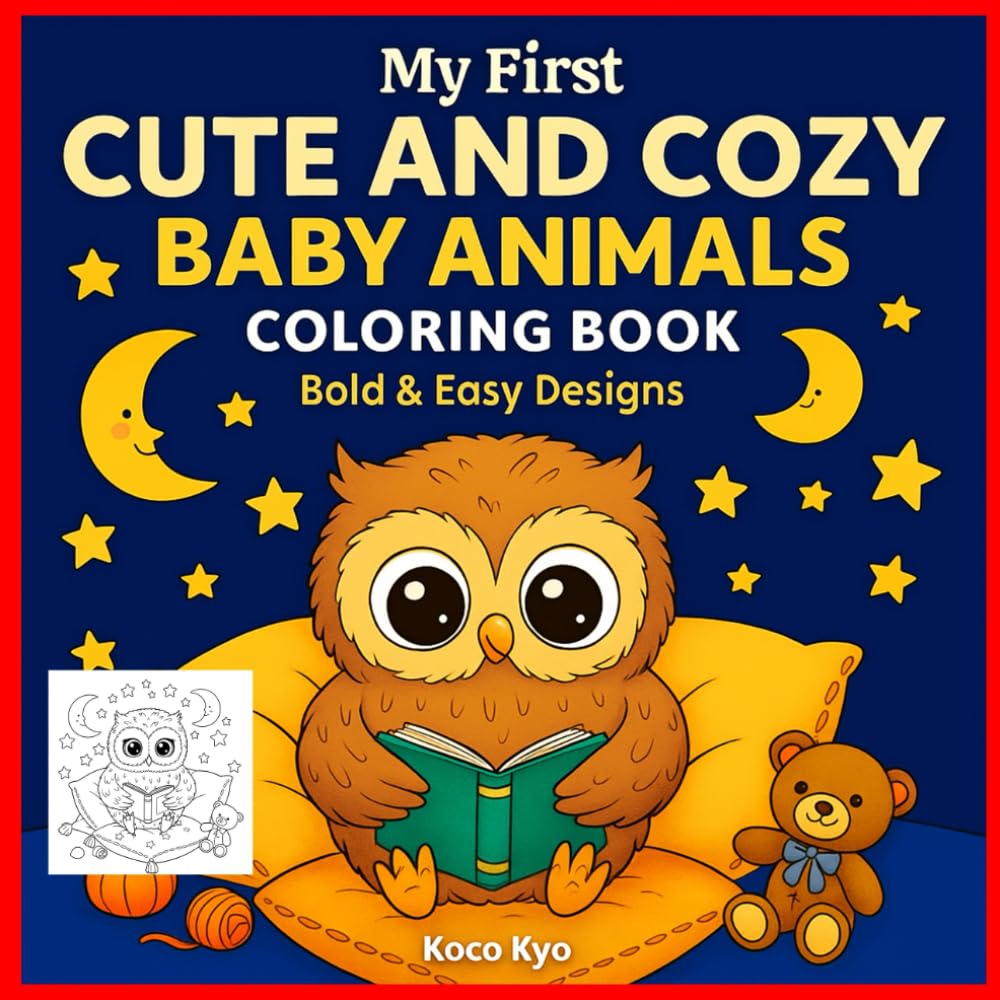
My First Cute and Cozy Baby Animals Coloring Book
The book that started it all for me. Bold lines, simple designs, and animals that don't judge your color choices. Perfect for the "I can't even color" crowd.
$9.99 Get the Book
When a Random Shape Became a Character
A few weeks of coloring passed. I was getting braver. I'd colored most of the baby animals. I'd even tried shading.
But I started wanting more. Not more complexity — less. I wanted to make something from nothing. I wanted to draw.
And that's when the terror came back. Full force.
Drawing felt different than coloring. Coloring had boundaries. Drawing was a blank page and me and all my old beliefs about what I could and couldn't do.
I bought sketchbooks. I watched YouTube tutorials. I had a whole Pinterest board called "Learn to Draw" that I looked at but never acted on.
Every time I put pen to paper, my brain would do this thing where it would show me every bad drawing I'd ever made. Every wonky horse from third grade. Every lopsided house. Every person with arms that were two different lengths.
I was stuck.
Then one night, I wasn't trying to draw anything good. I was just… doodling. Making shapes. And I drew a blob. Just a random, amoeba-shaped blob.
And I looked at it and thought: That looks kind of like a character.
So I added two lines. Legs.
Then I added two dots. Eyes.
And suddenly there was this little blob person standing on my page, looking at me with these round, surprised eyes.
It wasn't good. It wasn't going to be in a gallery. But it was something. And it had come from nothing. From a random shape I'd made without thinking.
I started making more. Blob after blob. Some became animals. Some became little people. Some became things I couldn't name and didn't need to name.
I didn't know it yet, but I had stumbled onto the method that would become The Blob Drawing Book. The thing I'd been looking for wasn't talent. It wasn't technique. It was permission to start with a mess.
The Blob With a Bow Tie
The cry moment — and I'm telling you this even though my face is hot — happened over a blob with a bow tie.
It was maybe two weeks into this blob phase. I was at my kitchen table, the one that had seen me color baby animals and stare at the microwave and do a lot of quiet, desperate things.
I had drawn a blob. A slightly lopsided one, wider at the bottom. I'd added two little stick legs. Two dot eyes. And then, for some reason, I'd given it a bow tie.
I don't even know why. I wasn't trying to make anything meaningful. I was just following this little process I'd developed: start with a blob, add lines, see what happens.
But when I looked at it — this ridiculous little character with its bow tie and its slightly lopsided smile and its round little cheeks that I'd added on a whim — something in my chest just gave.
I started crying.
Not the pretty kind of crying you see in movies. Not a single dignified tear. The ugly kind. The kind where your nose runs and you're making these weird hiccupping sounds and you're hunched over your kitchen table at 2 AM, crying over a blob with a bow tie.
And the weird thing was — I wasn't crying because it was good. I was crying because it was mine. Because I had made it. Because somewhere in the process of drawing this ridiculous little character, I had found a part of myself I thought was gone.
The part that played. The part that made things just to see what would happen. The part that didn't care if it was good, because good wasn't the point.
I cried for maybe ten minutes. Then I wiped my face, made actual tea this time, and drew another blob.
What the Science Says (It's Not Woo-Woo)
The Research Behind the Blob
I didn't know it then, but there's actual science behind why this worked.
A 2016 study from Drexel University found that 45 minutes of art making significantly reduced cortisol levels in 75% of participants — and you didn't need to be good at it. The benefit came from the doing, not the outcome.
Research on "flow states" — that psychological zone where you're so absorbed in something that time disappears — shows that simple, repetitive creative tasks (like coloring or drawing basic shapes) can activate the same neural pathways as meditation. Your amygdala — the part of your brain that handles fear and stress — literally calms down.
Dr. Girija Kaimal, the lead researcher on the Drexel study, put it simply: "The arts can be a way for people to process difficult emotions and experiences, even if they don't have words for what they're feeling."
Which is exactly what happened to me. I didn't have words for the gray. But I had a green hedgehog. I had a blob with a bow tie. I had little ducklings in rain hats.
My hands knew what to do before my brain did.
The 4-Step Blob Method
If you want to try this — and I hope you do, even if you're reading this skeptically with your arms crossed — here's the method I stumbled into and now teach:
That's it. Four steps. No talent required. No "I can't draw" allowed. The blob does the heavy lifting. You just show up.
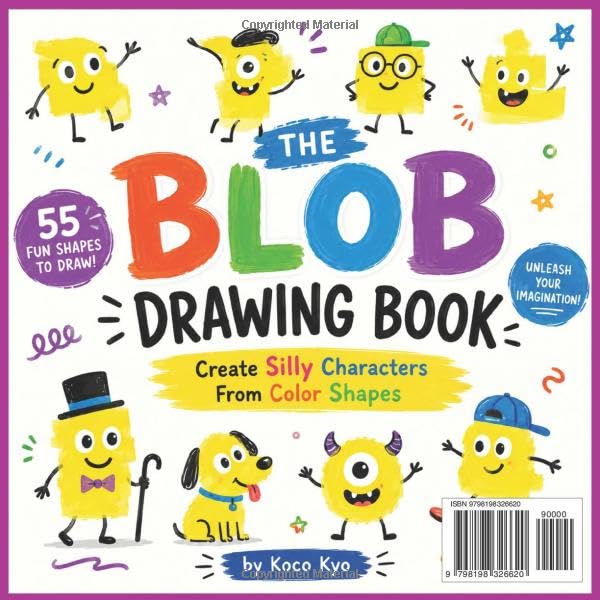
The Blob Drawing Book
The full method with 50+ pages of blob-inspired characters. For beginners who think they can't draw. Big ideas start with little blobs.
$9.99 Get the Book
Before & After: What Actually Changed
People always want to know: did it fix everything? Did you suddenly become a prolific artist? Did the gray lift completely and never come back?
No.
But here's what did happen.
Before
I couldn't remember the last time I'd made something for fun. My sketchbooks were empty. My creative life felt like a room I'd locked and lost the key to.
After
I have three sketchbooks going right now. They're messy. They're full of blobs and bad handwriting and half-finished things. They're the most alive things in my apartment.
Before
I thought creativity was a gift you either had or didn't. I thought I didn't have it.
After
I know now that creativity is a relationship. You either tend it or you don't. And it will wait for you. It's patient like that.
Before
I was exhausted all the time. Not physically — I slept enough. But existentially. Like I was running on a treadmill that went nowhere.
After
I still get tired. But now I have this thing I can do — this small, quiet, nine-dollar thing — that fills me back up. It's not a cure. It's a practice.
I'm not a different person. I'm just a person who remembers how to play.
A Letter to You, Reading This at Midnight
If you're reading this at midnight, in your kitchen, in your car during lunch break, in a bathroom stall because it's the only quiet place you could find — I see you.
I was you.
I know the specific exhaustion of being a functional adult who has forgotten what it feels like to want something just because it's fun. I know the way the gray creeps in so slowly you don't notice it until you're standing in a drugstore at 11 PM, terrified of a coloring book.
I'm not going to tell you it gets easy. I'm not going to tell you that one coloring session will fix your life. I'm not going to tell you that you'll never have bad days again.
I still have bad days.
But I'm going to tell you it gets possible.
There is a version of you that still wants to make things. That version of you is not gone. It's just quiet. It's been waiting while you took care of everything else. It's patient like that.
You don't need to be good at it. You don't need to be consistent. You don't need to post it anywhere or make it mean something.
You just need to start with a blob.
And then another one.
And then another.
Until one day you look up and realize you've been playing. And the world didn't end. And you're still here. And you made something. And it's yours.
That's enough. That's the whole thing.
On Bad Days, I Still Color
Sometimes, on the really bad days, I don't even draw. I just color.
I go back to the baby animals. Or to my USA Cozy Places to Go Coloring Book — little cottages and diners and gas stations in the middle of nowhere. There are days when the idea of a blank page is too much, and I just need to fill in lines that someone else drew.
And that's okay. That's the thing nobody tells you about creative recovery: it's not a straight line. Some days you're making things from nothing. Some days you just need to color inside the lines. Both count. Both matter. Both are you, coming back to yourself in whatever way you can manage that day.
It's like the difference between going out to a big event and just sitting on your porch watching Christmas lights from down the street. Both are valid ways to feel something. Both are you, choosing to show up for yourself.
If you're looking for deals on coloring books and art supplies, I keep a running list of today's best Amazon deals — sometimes you can grab a few books for less than a takeout order.
The Way Back Is Smaller Than You Think
It's been a while now since that 2 AM in the kitchen. The rain still comes sometimes. The microwave clock still blinks at me at odd hours.
But the apartment is different now. There are sketchbooks on the table. Colored pencils in a jar. Little blob characters taped to the fridge — some with bow ties, some with tiny cups of coffee, some just being blobs.
I still have bad days. The gray still visits sometimes. I still get tired in that existential way that sleep doesn't fix.
But I know now that I have a way back. It costs nine dollars and change. It fits in a drawer. It doesn't ask me to be good at anything.
It just asks me to show up.
To draw a blob.
To add two lines.
To see what happens.
If you've lost something — your creativity, your spark, your sense of yourself as a person who makes things — I'm not going to tell you it's easy to find again.
But I'm going to tell you it's there.
And I'm going to tell you that sometimes the way back is so small you almost miss it. A blob. A hedgehog. A duckling in a rain hat.
Sometimes the way back is just a pen, a piece of paper, and the willingness to make a mess.
That's enough. That's always been enough.
Frequently Asked Questions
Can coloring really help with creative burnout?
Yes. Research from Drexel University (2016) found that 45 minutes of art making significantly reduced cortisol levels in 75% of participants — and you don't need to be good at it. The benefit comes from the doing, not the outcome.
What if I can't draw at all?
The blob method is specifically designed for people who think they can't draw. You start with a random shape — literally any shape — and build from there. There's no wrong way to do it.
How long until I feel a difference?
Many people feel a shift in their first session. Research shows that even 20 minutes of simple art making can activate flow states and calm the amygdala. But deep creative recovery is a practice, not a quick fix.
Do I need expensive supplies?
No. A nine-dollar coloring book and a pack of colored pencils from the drugstore is more than enough. The value is in the practice, not the materials.


0 Comments